
Puddle Pumps - Low-Level Submersible Pumps for Flood Protection
-

 Original price £105.00 - Original price £105.00Original price£105.00 £126.00£105.00 - £105.00Current price £105.00 £126.00 £126.00
Stream SPP2-4 Submersible Puddle Pump - Great Value Easy to Use Flood Pump
Stream Pumps- Best for small floods & light use
- Pumps to low levels (circa 2mm)
- Compact, lightweight and easy to use
- 230v 3 Pin Domestic Plug
- 2 Year Warranty
Best Budget Puddle Pump – Pumps Down to 2mm What is the SPP2‑4 pump used for? Designed and manufactured by Stream Pumps, the SPP2‑4 puddle su...
View full detailsOriginal price £105.00 - Original price £105.00Original price£105.00 £126.00£105.00 - £105.00Current price £105.00 £126.00 £126.00 -

 Original price £350.00 - Original price £350.00Original price£350.00 £420.00£350.00 - £350.00Current price £350.00 £420.00 £420.00
Stream SPK530 Puddle Sucker Pump - Pumps to 1mm Depth - Heavy Duty Flood Pump
Stream Pumps- Best for larger or repeated flooding
- As seen on the Environment Agency's Floodmobile
- Pumps as low as 1mm
- 3 Year Warranty
- 110V or 230V
- Adjustable discharge connector (vertical or horizontal outlet)
Stream SPK530 Heavy Duty Puddle Sucker Pump – Pumps Down to 1mm Stream Pumps are the manufacturer of the SPK530 puddle sucker pump. The manufacture...
View full detailsOriginal price £350.00 - Original price £350.00Original price£350.00 £420.00£350.00 - £350.00Current price £350.00 £420.00 £420.00 -
 Original price £395.00 - Original price £395.00Original price£395.00 £474.00£395.00 - £395.00Current price £395.00 £474.00 £474.00
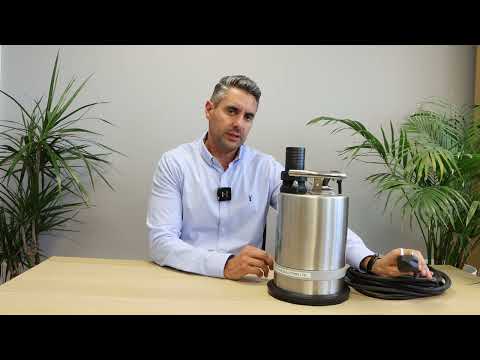
EVAK Residox 400 Manual Puddle Pump
EVAK- Ultra-low-level manual puddle pump, removes water to approximately 1 mm
- 250 l/min flow, 11 m head, suited to domestic and light commercial flooding
- Stainless steel build, cast iron housing, Hytrel impeller
- Surface-safe rubberised base for finished floors
- 110V or 230V, no priming required
EVAK Residox 400 Ultra-Low-Level | Pumps Down to 1 mm | No Priming Required | 110V & 230V Options The EVAK Residox 400 is a stainless steel ult...
View full detailsOriginal price £395.00 - Original price £395.00Original price£395.00 £474.00£395.00 - £395.00Current price £395.00 £474.00 £474.00 -

 Original price £250.00 - Original price £250.00Original price£250.00 £300.00£250.00 - £250.00Current price £250.00 £300.00 £300.00
EGO 500 SELS Automatic Puddle Pump - Pumps to Low Levels with Auto Sensor
Flood Protection Solutions- Perfect for narrow sumps and chambers
- Automatic low level pump
- Adjustable electronic start/stop
- 230v with 3 pin Domestic Plug
EGO 500 SELS Automatic Puddle Pump – Pumps Down to 1mm The EGO 500 SELS automatic submersible puddle pump is perfect to use in narrow sumps and ch...
View full detailsOriginal price £250.00 - Original price £250.00Original price£250.00 £300.00£250.00 - £250.00Current price £250.00 £300.00 £300.00 -

 FromOriginal price £475.00 - Original price £495.00Original price£475.00 £570.00£475.00 - £495.00Current price £475.00 £570.00 £570.00
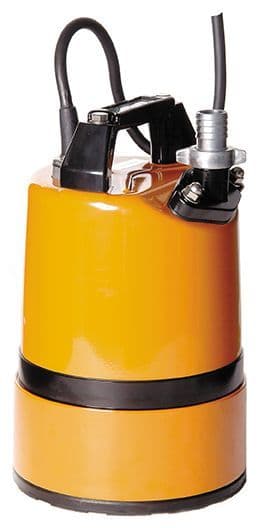
Tsurumi LSC 1.4S - Heavy Duty Manual Puddle Sucker Pump
Tsurumi Pumps- Pumps as low as 1mm
- Operates for extended periods
- Used widely by hire, utilities and water companies
- Choose Manual or Automatic
- Adjustable discharge connector (vertical or horizontal outlet)
Tsurumi LSC 1.4S Puddle Pump – Pumps Down to 1mm TSURUMI Pumps are the original manufacturer of the LSC 1.4S puddle sucker pump – a high-performan...
View full detailsFromOriginal price £475.00 - Original price £495.00Original price£475.00 £570.00£475.00 - £495.00Current price £475.00 £570.00 £570.00 -
 FromOriginal price £75.00 - Original price £217.00Original price£75.00 £90.00£75.00 - £217.00Current price £75.00 £90.00 £90.00
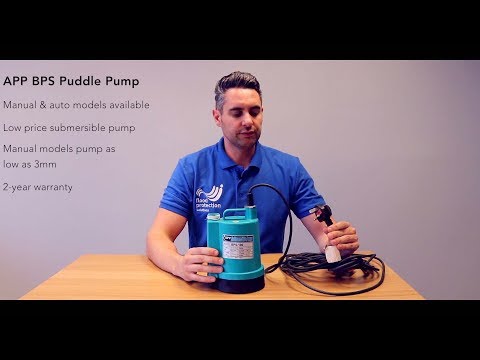
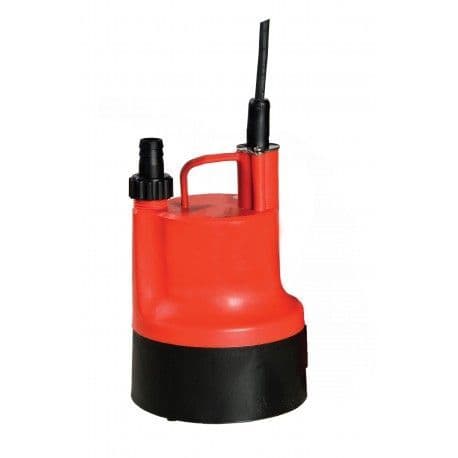
APP BPS Manual Submersible Puddle Pump
APP- Manual and auto models available
- BPS80 & BPS100 Manual models pump as low as 3mm
- 2 year warranty
- Choose between 230v or 110v
Cost‑Effective Puddle Pumps for Clean & Slightly Dirty Water APP Pumps offer the BPS series of puddle pumps, a range of cost‑effective and reli...
View full detailsFromOriginal price £75.00 - Original price £217.00Original price£75.00 £90.00£75.00 - £217.00Current price £75.00 £90.00 £90.00 -
 Original price £169.00 - Original price £169.00Original price£169.00 £202.80£169.00 - £169.00Current price £169.00 £202.80 £202.80
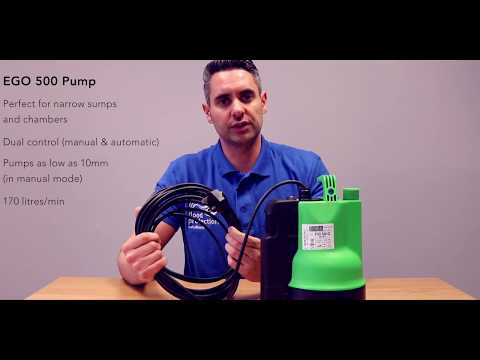
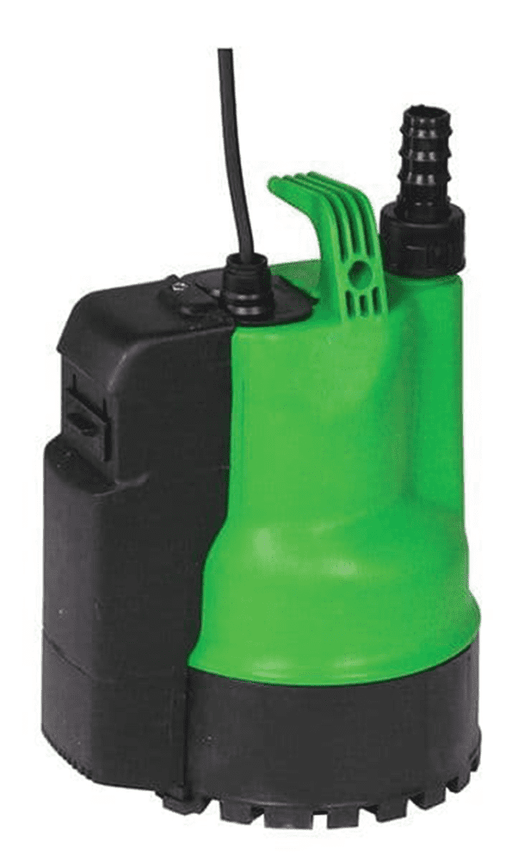
EGO 500 GI Submersible Drainage Dual Automatic and Manual Puddle Pump
Flood Protection Solutions- Perfect for narrow sumps and chambers
- Dual Control (automatic and manual settings)
- Pumps as low as 10mm (in manual mode)
- 230v 3 pin Domestic Plug
Dual‑Mode Low‑Suction Puddle Pump for Narrow Sumps & Low Water Levels The EGO 500 GI submersible puddle pump is perfect to use in narrow sumps ...
View full detailsOriginal price £169.00 - Original price £169.00Original price£169.00 £202.80£169.00 - £169.00Current price £169.00 £202.80 £202.80 -
 FromOriginal price £145.00 - Original price £205.00Original price£145.00 £174.00£145.00 - £205.00Current price £145.00 £174.00 £174.00
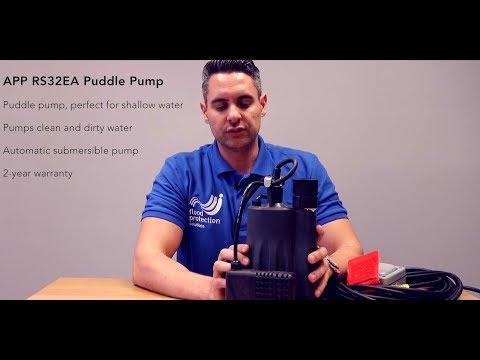
APP RS(EA) Automatic Submersible Puddle Pumps (RS32EA & RS40EA) - Ideal for Narrow Spaces
APP- Pumps clean and dirty water
- Automatic
- Ideal for narrow spaces
- Pumps to low levels!
- 230v 3 Pin Domestic Plug
Compact Automatic Submersible Pumps for Shallow Water & Tight Spaces APP Pumps manufacture the RS32EA and RS40EA automatic submersible pumps, d...
View full detailsFromOriginal price £145.00 - Original price £205.00Original price£145.00 £174.00£145.00 - £205.00Current price £145.00 £174.00 £174.00 -

 FromOriginal price £965.00 - Original price £1,275.00Original price£965.00 £1,158.00£965.00 - £1,275.00Current price £965.00 £1,158.00 £1,158.00
Tsurumi LSC2.75s - Puddle Sucker Pump
Tsurumi Pumps- Pumps as low as 1mm
- Operates for extended periods
- Used widely by hire, utilities and water companies
The Tsurumi LSC2.75S is a powerful and reliable submersible puddle pump designed for fast and efficient water removal. Built for heavy use and trus...
View full detailsFromOriginal price £965.00 - Original price £1,275.00Original price£965.00 £1,158.00£965.00 - £1,275.00Current price £965.00 £1,158.00 £1,158.00 -

 Original price £493.00 - Original price £493.00Original price£493.00 £591.60£493.00 - £493.00Current price £493.00 £591.60 £591.60
EVAK Residox 400 Automatic Puddle Pump
EVAK- Automatic puddle pump with integrated floor-level sensor
- Detects water at 3 mm (±1 mm) above the floor
- Adjustable delays prevent rapid on/off cycling, protecting the motor
- Plugs straight into 230V mains, no control panel required
- Full Residox 400 build, 250 l/min, 11 m head
EVAK Residox 400 Automatic Puddle Pump | Floor-Level Sensor | 230V The EVAK Residox 400 Automatic combines the Residox 400 puddle pump with an inte...
View full detailsOriginal price £493.00 - Original price £493.00Original price£493.00 £591.60£493.00 - £493.00Current price £493.00 £591.60 £591.60 -
Original price £583.00 - Original price £583.00Original price£583.00 £699.60£583.00 - £583.00Current price £583.00 £699.60 £699.60
EVAK Residox 750 Automatic Puddle Pump
EVAK- High-flow automatic puddle pump with integrated automatic sensor
- Detects water at 3 mm (±1 mm) above the floor
- Adjustable delays prevent rapid on/off cycling, protecting the motor
- Plugs straight into 230V mains, no control panel required
- Larger areas, deeper sumps, longer runs, uphill discharge
EVAK Residox 750 Automatic Puddle Pump | High Flow Sensor Pump | 230V The EVAK Residox 750 Automatic pairs the higher-output Residox 750 with an in...
View full detailsOriginal price £583.00 - Original price £583.00Original price£583.00 £699.60£583.00 - £583.00Current price £583.00 £699.60 £699.60 -
Original price £485.00 - Original price £485.00Original price£485.00 £582.00£485.00 - £485.00Current price £485.00 £582.00 £582.00
EVAK Residox 750 Manual Puddle Pump
EVAK- Highest Flow Rate of Puddle Pump Range
- 330 l/min flow, 16 m head, built for larger floods and uphill discharge
- Stainless steel build, cast iron housing, Hytrel impeller
- 2 mm free passage and surface-safe base
- 110V or 230V, no priming required
EVAK Residox 750 Manual Puddle Pump | High Flow, Pumps to 1 mm | 110V & 230V The EVAK Residox 750 is the higher-output ultra-low-level manual p...
View full detailsOriginal price £485.00 - Original price £485.00Original price£485.00 £582.00£485.00 - £485.00Current price £485.00 £582.00 £582.00 -

 Original price £185.00 - Original price £185.00Original price£185.00 £222.00£185.00 - £185.00Current price £185.00 £222.00 £222.00
EGO 500 GI LS Submersible Drainage Dual Automatic and Manual Puddle Pump
Flood Protection Solutions- Manual or automatic operation via integrated float switch
- Pumps down to just 1 mm with low‑suction design
- Ideal for narrow sumps and confined chambers
- 170lt/m flow rate
Dual‑Mode Low‑Suction Puddle Pump for Narrow Sumps & Low Water Levels The EGO 500 GI LS submersible puddle pump is ideal for narrow sumps and c...
View full detailsOriginal price £185.00 - Original price £185.00Original price£185.00 £222.00£185.00 - £185.00Current price £185.00 £222.00 £222.00 -
 Original price £125.00 - Original price £125.00Original price£125.00 £150.00£125.00 - £125.00Current price £125.00 £150.00 £150.00
APP BPS100EA Submersible Puddle Pump with Compact Float Switch
APP- Compact automatic float switch
- Pump as low as 3mm
- 2 year warranty
- Lightweight and portable
Automatic Puddle Pump with Compact Float for Shallow Water. The BPS-100EA is an automatic puddle pump designed specifically for restricted spaces a...
View full detailsOriginal price £125.00 - Original price £125.00Original price£125.00 £150.00£125.00 - £125.00Current price £125.00 £150.00 £150.00 -
 FromOriginal price £92.00 - Original price £239.00Original price£92.00 £110.40£92.00 - £239.00Current price £92.00 £110.40 £110.40
APP BPS Submersible Puddle Pump Automatic Float
APP- Automatic float switch
- Designed for clean and slightly dirty water
- 2 year warranty
- Choose between 230v or 110v
BPS Automatic Submersible Puddle Pumps (BPS-80A, BPS-100A & BPS-400A) The APP BPS automatic puddle pumps combine compact submersible pumping wi...
View full detailsFromOriginal price £92.00 - Original price £239.00Original price£92.00 £110.40£92.00 - £239.00Current price £92.00 £110.40 £110.40 -
 FromOriginal price £675.00 - Original price £935.00Original price£675.00 £810.00£675.00 - £935.00Current price £675.00 £810.00 £810.00
Tsurumi LSC 1.4S Heavy Duty Automatic Puddle Pumps
Tsurumi Pumps- Pumps as low as 1mm with sensor probes
- Heavy duty automatic puddle pump
- Used widely by hire, utilities and water companies
- Adjustable vertical or horizontal outlet
Tsurumi LSC 1.4S Puddle Pump – Ultra‑Low Level Control The Tsurumi LSC 1.4S Automatic puddle pump combines ultra‑low level pumping performance wit...
View full detailsFromOriginal price £675.00 - Original price £935.00Original price£675.00 £810.00£675.00 - £935.00Current price £675.00 £810.00 £810.00


What is a Puddle Pump?
Standard submersible pumps are water cooled and unable to pump to low levels.
Puddle pumps are a hidden gem in the water pump world. Although they are fantastic products, it appears that there is little knowledge on how they work and the use of them. It should be noted that puddle pumps can still be fully submerged in water.
Electric puddle pumps can be used internally or externally.
Puddle pumps are perfect for use in flood protection and emergency response situations.
They can be used on most surfaces to pump away residue and nuisance water, which may occur because of seepage, rainfall, or flood water. Puddle pumps are perfect for emergency response situations because you can position them straight onto a surface and pump shallow water. This feature means that puddle pumps can hugely improve the response to flooding events and help minimise the damage that flooding causes.
Simon Crowther from floodandwaterpumps.co.uk explains further in the video below regarding: "What is a Puddle Pump?"
Manual vs. Automatic Puddle Pumps: Which is Right for You?
Puddle pumps come in both manual and automatic models, allowing you flexibility and choice to suit your needs, requirements, and budget.
Manual: a float switch is not fitted. The pump requires an operator to control the pump by switching it off or on at the mains.
Automatic: a float switch or electronic sensor is fitted. The pump will turn itself on and off automatically as the water level rises and falls. The pump is automatically controlled by the level switch or sensor.
Manual puddle pumps allow you to monitor the water level and control the pump manually, switching it on or off at the mains as required. They are typically more affordable than automatic puddle pumps and can usually pump water down to lower levels. Manual pumps such as the Stream SPK530 Puddle Pump can pump as low as 1mm, removing the water and just leaving behind a wet floor.
On the other hand, automatic puddle pumps are equipped with sensors or float switches that turn the pump on or off as the water level changes, providing a more passive solution. This makes them ideal for hard-to-reach areas like lift shafts or basements, where consistent monitoring is not feasible, or in a flood scenario where you may be unable to monitor the water levels, or perhaps to minimise human intervention.
A popular and great value automatic puddle pump is the APP RS32EA Submersible Automatic Puddle Pump which turns on at 50mm and off at 25mm.
For higher flow requirements, the EVAK Residox is now also available as an automatic, in both the Residox 400 Automatic and the more powerful Residox 750 Automatic. Rather than a tethered float switch, both use an integrated floor-level electronic sensor which detects water at just 3mm above the floor, well below the level any pendant float switch could reach. Adjustable start and stop delays (1 to 120 seconds) prevent the rapid on/off cycling that commonly causes premature motor failure in float-switch automatic pumps. Both plug straight into a 230V mains socket with no control panel required.
If you opt for an automatic puddle pump, this guide explains the sensor and float switch options: Automatic Water Pumps and the Different Switches.
The EGO500 Gi Puddle Pump can be switched between manual and automatic modes. In manual it will pump as low as 10mm, however in automatic mode it will only pump as low as 60mm.
It should be noted manual pumps often pump to lower levels.
Looking to understand the flow rate and head, use our Water Pump Performance Calculator.
Puddle Pumps vs. Standard Submersible Pumps: Key Differences
1. Low-Level Water Pumping Capability
Traditional submersible pumps are often water-cooled and require full submersion in water, making them unsuitable for low-level water scenarios. In contrast, puddle pumps can pump down to just a few millimetres, removing even minimal water levels without overheating.
The following diagrams compare a submersible pump with a puddle pump:
2. Simplified Deployment
Since puddle pumps don't require a sump chamber, they can be placed directly on most surfaces, allowing rapid deployment in flood response situations. This makes them especially useful for emergency use, or for use in different locations. In contrast, a Submersible Pump would require a chamber or full submersion in water, or to be part of a Packaged Pump Station, and therefore are less portable.
Top Benefits of Puddle Pumps
- Emergency Flood Protection: Quickly remove shallow water from indoor and outdoor areas.
- Cost-Effective: No requirement for groundworks, such as excavation or chambers.
- Versatility: Suitable for a wide range of surfaces and applications. The pump can be moved between locations.
- Ease of Use: Simply position the pump and let it do the work.
Applications for Puddle Pumps
Puddle pumps are a go-to choice for flood protection and emergency scenarios. They are perfect for:
- Flooded Basements: Efficiently remove water from flooded spaces.
- Low-Level Water Removal: Clear nuisance water caused by rainfall, leaks or seepage.
- Construction Sites: Keep areas free of surface water during projects. Puddle pumps are often also installed on flat roofs.
- Emergency Response: Deploy rapidly during flooding to minimise damage.
- Hire Fleets: Puddle pumps are incredibly popular on hire fleets due to their flexibility to be used in various locations, and their robust design.
- Property Flood Resilience (PFR): Puddle pumps form a vital part of PFR. Where flood resistance measures such as flood barriers can reduce ingress into a property, puddle pumps are recommended to maintain a low water level, clearing any water that does enter the property and ensuring damage is minimal. FPS supplied a puddle pump as part of the Cumbria Flood Resilience Showcase Project, and a Stream SPK530 Puddle Pump is currently showcased on the Environment Agency's 'FloodMobile'.
- Flooded Patios: Puddle Pumps can be used to remove water from flooded patios, pathways or gardens; pumping water away from properties or low level areas, as shown in the video below: How to Drain a Flooded Patio Using a Puddle Pump
At Flood Protection Solutions Ltd, puddle pumps are integral to our mission of enhancing flood response. Their portability, ease of use, and ability to remove low-level water make them invaluable for protecting homes and businesses from flood damage.
Why Choose a Puddle Pump?
Puddle pumps offer a simple, reliable, and effective solution for anyone dealing with surface water challenges. Whether for preventive measures or quick response in an emergency, they provide unmatched efficiency and ease of use.
What is the Best High Powered Puddle Pump?
The EVAK Residox Puddle Pump is an incredibly popular puddle pump thanks to its ease of use, robust cast iron and stainless steel build, and high flow rate of 250 litres per minute on the Residox 400 (rising to 330 litres per minute on the Residox 750). Both models are available in manual versions for operator-controlled use, and as automatic versions with an integrated floor-level sensor for unattended drainage in basements, lift shafts, plant rooms and other defined areas where water periodically collects.
Why floodandwaterpumps.co.uk
You can be sure that when you buy from us that you're getting the best products and service in the water pump industry. As the UK's No.1 pump supplier and a supplier to the Environment Agency, our puddle pumps undergo extensive testing and use to ensure they are the highest quality water pumps available.
Large Stocks of Puddle Pumps are held at our Nottinghamshire Warehouse
We are proud to supply the Stream SPP2-4 Submersible Puddle Pump to Amazon, where it has become an Amazon best seller.
When it comes to puddle pumps, floodandwaterpumps.co.uk should be your top choice, offering unmatched reliability and performance for all your flood control and drainage needs.


